
In damage prevention, strong training is about more than teaching someone how to operate a piece of equipment. It is about helping technicians understand what is happening beneath their feet, recognize challenging situations, and make the right decisions before those decisions carry real-world consequences.
That presents an inherent challenge for utility locating: much of what technicians are working to identify is underground and out of sight.
For Bermex, virtual reality utility locator training is creating another way to help bridge that gap. By incorporating VR technology into locator training, technicians have the opportunity to experience realistic locating scenarios in a controlled environment before applying those skills in the field. The technology also creates new possibilities for ongoing development, targeted retraining, and technician certification.
Bringing Underground Infrastructure Into View
For someone who has never performed utility locating, one of the most difficult concepts to grasp is also one of the most fundamental: you cannot see the infrastructure you are trying to locate.
Virtual reality changes that learning experience.
Instead of relying solely on classroom instruction to visualize what is happening underground, technicians can interact with simulated environments that help them understand the relationship between their locating equipment and the infrastructure beneath the surface. This gives new technicians greater context for the techniques they are learning and allows them to encounter realistic scenarios before heading into the field.
That experience is intended to complement — not replace — hands-on field training. By the time a new technician enters a real-world environment, they can already have a foundational understanding of how the locating process works.
The result is the potential for a more confident transition from training to fieldwork.
Creating a More Measurable Training Experience
Another benefit of VR training is the ability to evaluate how a technician performs, rather than simply whether they completed a training module.
The technology can score technicians against specific locating criteria and identify behaviors that can affect the accuracy of a locate. That can include how equipment is held and moved, whether the appropriate frequencies are being used, and whether proper locating techniques are being followed.
This creates an opportunity to turn training into a more measurable development process.
Rather than waiting for an issue to emerge in the field, trainers can observe where a technician may need additional support and address those behaviors in a controlled environment. Technicians can practice, receive feedback and continue developing their skills without the pressure and risk associated with learning exclusively in live field conditions.
Moving From Training to Targeted Development
The value of virtual reality does not end when initial training is complete.
Experienced technicians encounter a wide variety of infrastructure configurations, site conditions and locating challenges throughout their careers. When someone struggles with a particular circumstance, VR can provide an opportunity to recreate similar scenarios and focus training on the specific skill that needs improvement.
That makes the technology useful not only for onboarding, but also for retraining and continued development. Instead of approaching refresher training as a one-size-fits-all exercise, trainers can focus attention on particular deficiencies and reinforce the correct techniques.
This proactive approach is especially important in damage prevention. Developing technicians before an issue occurs is far more valuable than identifying a knowledge or skill gap after the fact.
Supporting Consistency and Continued Competency
Virtual reality also opens the door to a more consistent approach to evaluating technicians over time.
The technology can support recurring certification by placing technicians through defined scenarios and evaluating their performance against established criteria. Depending on operational needs, those evaluations could focus on different utility types, including gas, electric, water, and sewer.
Regular evaluation offers benefits on both sides of a utility partnership. For technicians, it reinforces proper practices and helps keep important skills sharp. For utilities, documented training and evaluation can provide additional confidence that the people working on their systems are being actively developed and assessed.
Ultimately, that is what makes technology like VR compelling. Its value isn’t in innovation for innovation’s sake, but in its ability to support better-trained people.
Starting Purposefully and Learning as We Go
Bermex is taking a measured approach to incorporating VR into our training program.
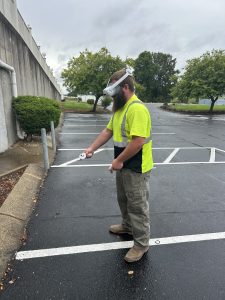
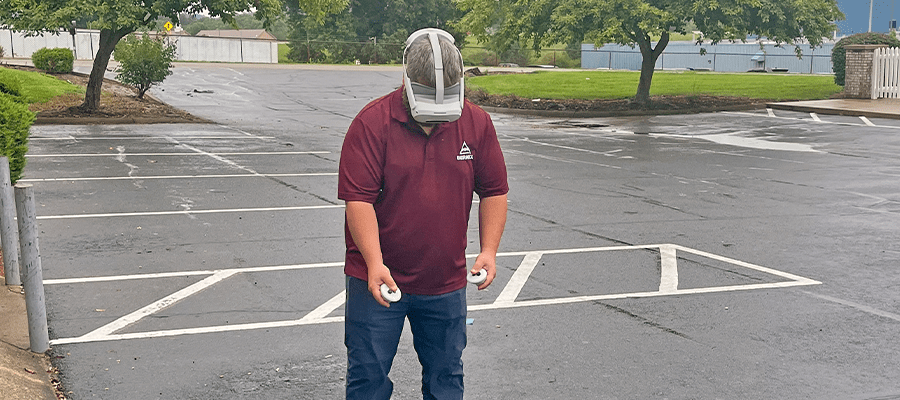
A Bermex technician practices utility locating techniques using virtual reality technology and locating equipment.
We currently have two VR training setups supporting gas operations in the Rochester, New York, and Columbus, Ohio markets. These locations provide an opportunity to evaluate the technology in operations that are actively bringing new employees into the organization. As we learn from those initial applications and determine where the technology provides the greatest value, there is an opportunity to expand its use in the future.
That approach reflects an important principle behind innovation in damage prevention. Technology should solve a real problem. Rather than adopting a new tool because it is available, the focus should be on how it can improve the way people learn, develop and perform.
Investing in People Through Technology
Damage prevention depends on many things — effective processes, reliable equipment, strong partnerships and the right technology among them. But ultimately, people make the decisions that determine how successfully those pieces come together.
That is why the most meaningful application of VR may be its ability to invest in the people doing the work.
Giving a new technician an opportunity to understand the underground environment before stepping into the field can build confidence. Giving an experienced technician a safe environment to work through a difficult scenario can strengthen performance. And providing consistent, measurable opportunities for evaluation can help reinforce the standards that utilities and their customers depend on.
For Bermex, virtual reality utility locator training represents another way to be proactive about training rather than reactive about performance — using technology to identify opportunities for improvement, reinforce the fundamentals and continually develop the people responsible for protecting critical infrastructure.
A Proactive Approach to Damage Prevention
Effective damage prevention starts with knowledgeable, well-prepared people. Learn how Bermex partners with utilities to strengthen damage prevention programs and protect critical infrastructure.